Ultrasonic Water
Flow & Level Sensor
Monitor flow velocity and water level across your network at a fraction of traditional cost — enabling denser coverage and better data for decision-making
- Real-time flow & level data
- Cloud dashboard & alerts
- REST API integration
The Challenge
Monitoring Blind Spots Leave Communities Exposed
Traditional hydrometric stations cost £20,000–£35,000 each (World Bank benchmark). At these prices, communities and river catchments needing multiple monitoring points are left with vast blind spots across their landscape.
Many at-risk areas lack adequate flow monitoring to enable them to respond to events. Data latency from manual downloads or basic telemetry compounds the problem.
Meanwhile, global flood damage runs into tens of billions of pounds annually. Better monitoring coverage and faster data access can improve lead times—but only if the economics work.
The Solution
Affordable Flow & Level Monitoring at Scale
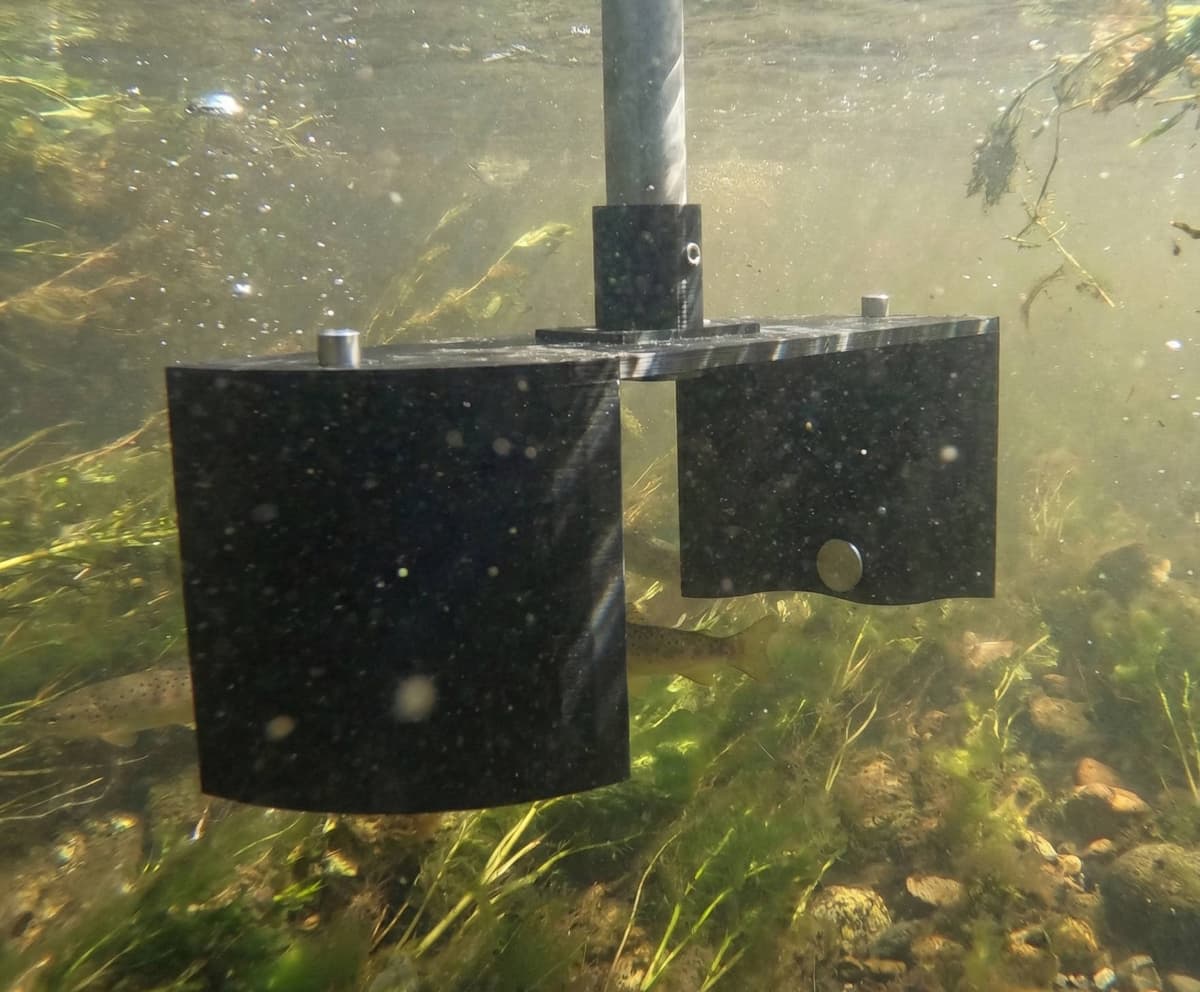
What it measures: Flow velocity and water level using ultrasonic Time-of-Flight technology. Submerged transducers measure how fast and how high the water is — with multi-point velocity profiling coming soon.
How data flows: Each sensor connects via 4G/5G cellular to our cloud platform. View real-time data on the web dashboard, configure threshold alerts, and integrate via REST API.
What's included: Submerged sensor unit, separate solar-powered electronics enclosure, cellular connectivity, cloud dashboard access, and configurable alerting. No per-reading fees for standard reporting intervals.
How It Works
From Ultrasonic Pulse to Alert
Understanding the measurement and data flow
Ultrasonic Pulse
Two transducers fire ultrasonic pulses through the water at 45° to the flow direction.
Time-of-Flight
The downstream pulse arrives faster than the upstream pulse. The time difference is proportional to velocity.
Quality Check
On-board algorithms validate signal quality and flag unreliable readings.
Edge Processing
Microcontroller calculates velocity from the time difference, applies calibration, and timestamps data.
Cellular Upload
Data transmits via 4G/5G to the cloud. Offline data is buffered and synced later.
Cloud & Alerts
Dashboard displays real-time data. Threshold breaches trigger instant alerts.
Ultrasonic Pulse
Two transducers fire ultrasonic pulses through the water at 45° to the flow direction.
Time-of-Flight
The downstream pulse arrives faster than the upstream pulse. The time difference is proportional to velocity.
Quality Check
On-board algorithms validate signal quality and flag unreliable readings.
Edge Processing
Microcontroller calculates velocity from the time difference, applies calibration, and timestamps data.
Cellular Upload
Data transmits via 4G/5G to the cloud. Offline data is buffered and synced later.
Cloud & Alerts
Dashboard displays real-time data. Threshold breaches trigger instant alerts.
Benefits
Why Organizations Choose HabitatSense
Four pillars that change the economics of water monitoring
Scale Economics
Deploy more sensors per budget
- Unit costs ~3–10% of traditional sensors
- Denser monitoring networks within existing CAPEX
- Reduced blind spots across watersheds
- Incremental expansion without major capital outlays
Operational Resilience
Fewer site visits, remote oversight
- Solar-powered with battery backup
- No moving parts to service
- Remote diagnostics and configuration
- Minimal scheduled maintenance requirements
Actionable Data
Real-time alerts, API integration
- Configurable threshold alerts (SMS, email, webhook)
- REST API for system integration
- Historical data export and analysis
- Data to support flood risk modelling
Data Quality
On-device QC, consistent sampling
- Automated quality checks on every measurement
- Flagging of anomalous or unreliable readings
- Consistent sampling intervals
- Timestamped data with accuracy metadata
Applications
Who Uses This Technology
From catchment monitoring to research — use cases across water management
Flood Risk Data
Who: Emergency managers, regional councils
Deploy dense sensor networks across catchments to capture continuous flow and level data. Use this rich dataset to build, calibrate, and improve hydrological and flood risk models over time.
Success metric: Density of real-time flow data across catchments
Urban Stormwater
Who: City engineers, utilities
Monitor storm drains across urban networks. Identify blockages, track flow patterns, and optimize maintenance schedules based on actual conditions rather than fixed intervals.
Success metric: Reduction in unmonitored drain incidents
Hydrological Research
Who: Scientists, research institutions
Deploy affordable sensor networks across study watersheds. Generate the dense datasets needed for improved hydrological models and climate impact analysis.
Success metric: Increased spatial coverage of flow measurements
Irrigation & Water Rights
Who: Agricultural districts, water managers
Track flow rates at key points in irrigation networks. Verify water delivery, identify losses, and support water rights compliance monitoring.
Success metric: Better tracking of water delivery and usage
Environmental Monitoring
Who: Conservation agencies, DOC
Monitor streams and wetlands where flow conditions affect habitat health. Detect changes that may impact aquatic species or trigger management actions.
Success metric: Continuous data for environmental assessments
Community Resilience
Who: Local government, civil defense
Extend monitoring to communities previously lacking instrumentation. Provide local data for emergency planning and post-event analysis.
Success metric: Coverage of at-risk areas with monitoring
Comparison
HabitatSense vs Traditional Sensors
Understanding the practical differences
| Feature | HabitatSense | Traditional | What This Means |
|---|---|---|---|
| Cost per unit | ~£950 | £10,000–£30,000 | Deploy 10–30× more sensors within the same budget |
| Installation | Mount & configure | Specialist technician required | Faster deployment, lower labor costs |
| Data access | Real-time cloud dashboard | Manual site visits or telemetry add-on | Immediate visibility without travel |
| Maintenance | Minimal (no moving parts) | Regular calibration & cleaning | Fewer site visits, lower ongoing OPEX |
| Network scalability | Designed for 10–50+ units | Typically 1–5 units | Coverage across entire watersheds, not just key points |
| Alerts | Built-in threshold alerts | Often requires separate system | Faster notification when conditions change |
Cost per unit
Installation
Data access
Maintenance
Network scalability
Alerts
Technical Specifications
Specifications for Engineers & Procurement
Detailed specs for technical evaluation—placeholders marked for final values
Measurement
- Measurement Type
- Flow velocity & water level (ToF)
- Technology
- Ultrasonic
- Velocity Range
- 0.25 - 5.0 m/s
- Accuracy
- ±5% of reading
- Resolution
- 0.01 m/s
- Mounting
- Submerged, pole/column mount at 45° to flow
Environment
- Operating Temperature
- -20°C to +60°C
- Ingress Protection
- IP67
- Mounting
- Submerged pole/column mount
- Housing Material
- 3D-printed PETG
Power
- Primary Power
- Solar panel (integrated)
- Backup
- Rechargeable battery
- Battery Capacity
- 80 Wh
- Expected Battery Life
- 3 years
- Charging
- Automatic solar management
Connectivity
- Cellular
- 4G/LTE Cat-M1 / NB-IoT
- Reporting Interval
- Configurable (5 min - 1 hr)
- Protocol
- RESTful API
- Antenna
- Integrated, external option available
- Offline Storage
- 10,000 measurements
Data & Integration
- Cloud Platform
- HabitatSense Dashboard
- API
- REST API (JSON)
- Export Formats
- CSV, JSON
- Alerts
- Email, Webhook
- Historical Data
- 365 days retention
- Real-time Updates
- Yes
Security & Compliance
- Data Encryption
- TLS 1.3 in transit
- Authentication
- Device certificates, API keys
- Data Residency
- UK
- Firmware Updates
- OTA (over-the-air)
- Device Management
- Remote configuration
FAQ
Frequently Asked Questions
Common questions from engineers, procurement, and field teams
Ready to Explore Dense Flow & Level Monitoring?
See how affordable sensors can extend your coverage